
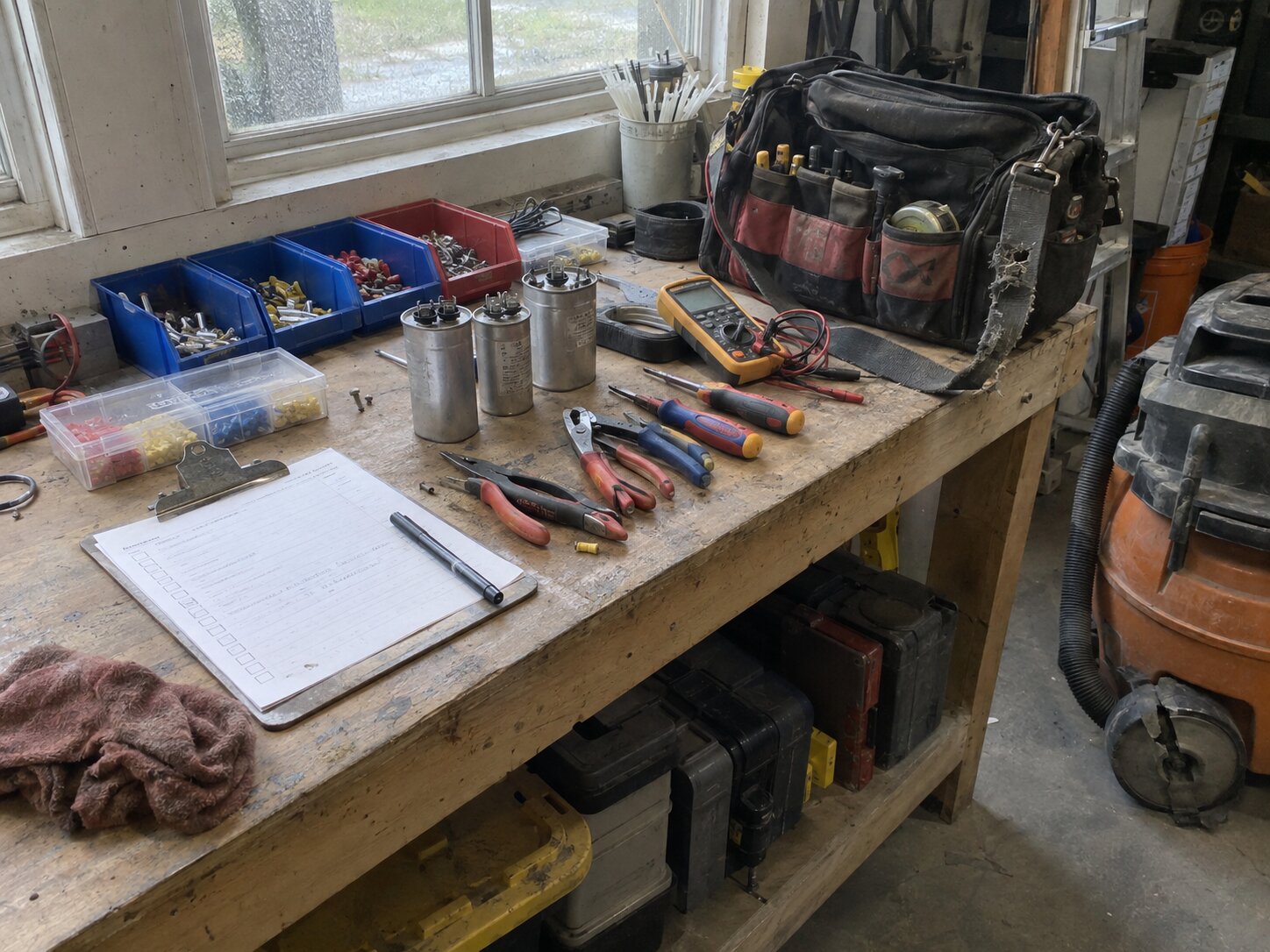
AC Capacitor Replacement in Leawood, KS
If your condenser hums but won’t spin up, or the fan needs a push from a stick to get going, the odds are high you’re looking at a failed capacitor — one of the cheapest, most common failures in the whole system. It’s also one that less scrupulous companies use as a doorway to a replacement pitch. 7th Degree Heating and Air tests the capacitor against its rated value and replaces it when that’s the fix, full stop.
What the Capacitor Does
The run capacitor stores and delivers the jolt of electrical energy that gets your compressor and condenser fan motor started and keeps them turning smoothly. A capacitor is rated in microfarads (µF) — a 35/5 dual-run capacitor, for example, serves both the compressor and the fan. As it weakens, the motors strain to start, draw excess current, and eventually stop turning altogether. The symptom — a condenser that won’t start — looks identical to a far more expensive compressor failure, which is exactly why we measure before we quote.
Signs of a Failing Capacitor
- Humming condenser that won’t start, or a fan that only spins with a manual nudge.
- A clicking sound as the system tries and fails to start the motors.
- AC shutting off randomly or struggling on the hottest afternoons, when heat stresses a marginal capacitor.
- A visibly bulged or leaking capacitor at the top — a clear sign it’s done.
Johnson County’s run of 90°F-plus summer days is hard on capacitors: heat is the number-one thing that ages them, so they tend to give out in the middle of a heat wave, under maximum load.
Frequently Asked Questions
- What does an AC capacitor actually do?
- It stores electrical energy and releases it to start and run the compressor and condenser fan motor. Think of it as the push that gets heavy motors spinning and keeps them steady. When it weakens, those motors can’t start properly — which shows up as a humming, no-start condenser.
- What are the signs my capacitor has failed?
- A condenser that hums but won’t start, a fan that needs a manual push, clicking as the system tries to start, random shutoffs in the heat, or a visibly bulged top on the capacitor. Because these mimic a compressor problem, we confirm with a meter rather than assuming.
- How long does a capacitor replacement take, and is it expensive?
- The replacement itself is quick — typically part of the same diagnostic visit — and the capacitor is an inexpensive part. The value is in correct diagnosis: confirming it’s the capacitor and not a compressor or motor problem so you pay for the small fix, not the big one.
- Why do capacitors fail so often here?
- Heat. A capacitor’s lifespan drops as operating temperature rises, and Johnson County summers run a lot of 90°F-plus days that push systems hard. That’s why capacitor failures cluster in mid-summer and why a spring tune-up that tests the capacitor can head one off before the heat wave.
- Can I replace the capacitor myself?
- We don’t recommend it. A capacitor can hold a dangerous electrical charge even after the power is off, and discharging and replacing it safely — with the correct microfarad and voltage rating — takes the right tools and training. It’s an inexpensive professional repair for good reason.
Contact 7th Degree Heating and Air
Serving Leawood, Overland Park, Prairie Village, Mission, Merriam, and Lenexa with fast, honest AC repair and 24/7 emergency service.
- Emergency Line (24/7): (913) 354-6552
- Address: 12720 Catalina St, Leawood, KS 66209
- Email: info@7thdegreeheatingandair.xyz
- Johnson County Class “DM” Mechanical License: DM-24-11873
- EPA Section 608 Universal: EPA-608-U-457921
Office Hours
- Emergency Service: 24 hours a day, 7 days a week
- Office Staff: Monday – Saturday, 9:00 AM – 5:00 PM
- Sunday: By appointment
- Closed: Holidays (emergency line always active)