
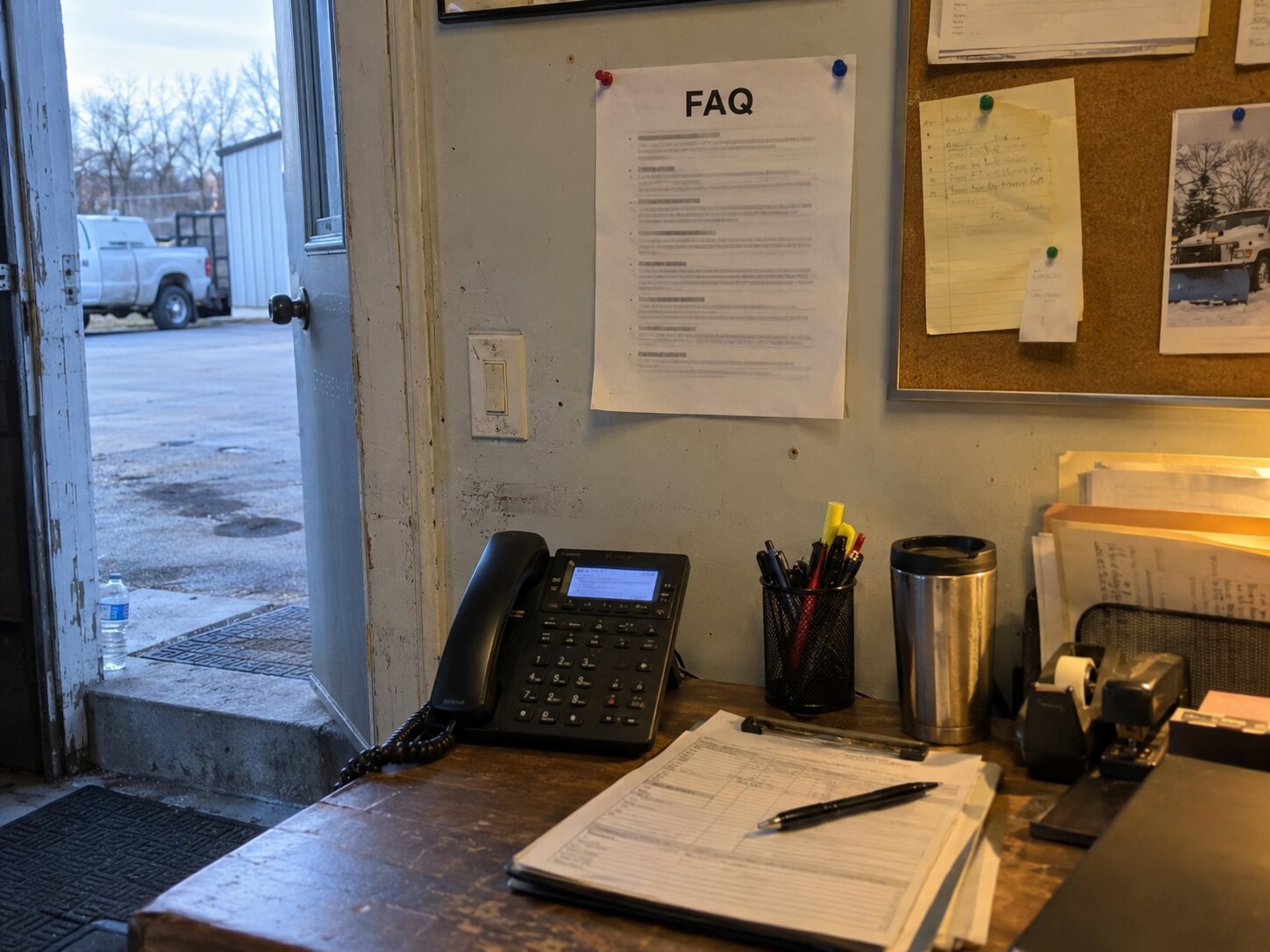
Frequently Asked Questions
The questions homeowners actually call us with, answered straight. Sizing, refrigerants, repair-versus-replace, maintenance, and what makes a heating or cooling decision easier — without the sales script. If yours isn’t here, call (913) 354-6552 and we’ll talk it through.
Sizing & Installation
- How do you size a furnace or AC for my home?
- With an ACCA Manual J load calculation, which measures heat loss in winter and heat gain in summer based on your home’s actual square footage, insulation, windows, and air sealing — not a square-footage rule of thumb. Equipment selection follows with Manual S, and ductwork with Manual D. Right-sizing prevents short-cycling and keeps the system efficient over its life.
- Isn’t a bigger system better?
- No, and that’s one of the most common and costly myths. An oversized AC cools the air fast but shuts off before it removes humidity, so the home feels cool but clammy. An oversized furnace blasts hot air then quits, swinging temperatures. Both wear out faster from short-cycling. Right-sized equipment runs steady and lasts longer.
- What refrigerant do new systems use?
- R-454B, the lower-global-warming-potential refrigerant that replaced R-410A in new residential equipment as of the 2025 transition. R-22 (the previous generation) is phased out and no longer produced, which is why major repairs on R-22 systems often point toward replacement.
- How long does an installation take?
- A straightforward AC or furnace replacement is usually a single day. Switching efficiency types (which changes the venting), changing the system layout, routing new gas or electrical, or adding zoning can extend that. We give you a realistic timeline with the quote.
Repair & Replace Decisions
- Should I repair or replace my system?
- It depends on age, the failed part, and the refrigerant. A small repair on a newer system is a clear repair. A major failure (compressor, heat exchanger) on a system near the end of typical life — about 12–15 years for AC, 15–20 for a furnace — usually favors replacement, especially if it runs phased-out R-22. We give you the honest numbers both ways and let you decide.
- What are the most common AC failures?
- The run capacitor leads the list, followed by contactors, low refrigerant from small leaks, clogged condensate drains, and dirty condenser coils. Most are inexpensive when caught early, which is what seasonal maintenance is for.
- What are the most common furnace failures?
- A dirty flame sensor is number one — the furnace lights, then shuts back off. Failed igniters, tripped limit switches from restricted airflow, and worn blower motors round out the common list. On older furnaces, cracked heat exchangers become more likely with age, which is why every heating service includes a combustion check and a carbon monoxide reading.
- My AC keeps freezing — what’s wrong?
- Almost always restricted airflow (a dirty filter, blocked return, or fouled coil) or low refrigerant from a leak. Both drop the coil below freezing. We diagnose which it is rather than just thawing it, and if it’s refrigerant, we find and seal the leak instead of topping it off.
Maintenance
- How often should I service my system?
- Twice a year is standard — cooling in spring before the heat, heating in fall before the cold. Each visit catches the small components creeping out of spec (capacitors, drains, charge) before they turn into breakdowns at the worst time.
- How often should I change my filter?
- For a standard one-inch pleated filter, every one to three months depending on pets, dust, and runtime. A deeper four- or five-inch media filter usually lasts six to twelve months. The honest test is to pull it and look — if it’s gray and matted, change it regardless of the calendar.
- Does maintenance actually prevent breakdowns?
- It prevents many of them. A large share of emergency calls trace back to issues that were detectable months earlier — a weakening capacitor, a fouling sensor, a clogging drain. Maintenance won’t make a system immortal, but it catches the common, predictable failures before they leave you without heat or cooling.
Comfort & Indoor Air Quality
- Why is my upstairs hotter than downstairs in summer?
- Heat rises, and the upper floor sees more roof and sun load while a single thermostat downstairs satisfies first. It’s a distribution and balance problem more than a sizing one. The real fixes are corrected ductwork, balanced airflow, and zoning — not just a bigger AC, which usually makes the imbalance worse.
- Do I need a humidifier or a dehumidifier?
- Often both, by season. Our winters are dry, where a whole-home humidifier helps; our summers are muggy, where a dehumidifier (or properly sized, steady-running AC) controls dampness. We assess your home’s actual humidity swings and recommend what fits.
- What’s the most effective thing I can do for my air quality?
- Proper filtration, changed on schedule. A correctly sized MERV 8 (or higher in a deeper media cabinet) captures more dust, pollen, and particulate than a basic fiberglass filter without restricting airflow. It’s the least flashy and most reliably effective step.
About Working With Us
- Are you licensed and insured?
- Yes. Johnson County Class “DM” Mechanical Contractor License DM-24-11873 and EPA Section 608 Universal certification EPA-608-U-457921. Insurance documentation available on request.
- Do you offer 24/7 emergency service?
- Yes, including holidays. Our emergency line is (913) 354-6552. We tell you honestly when you call whether your situation truly needs an emergency response or can wait for regular-rate service the next day.
- How do I get a quote?
- Call (913) 354-6552 or use the contact page. For a repair, we diagnose with instruments and quote the actual fault. For an installation, we’ll come out, run a load calculation, and provide a written quote with options laid out plainly.
Contact 7th Degree Heating and Air
Your local Leawood HVAC team, also serving Overland Park, Prairie Village, Mission, Merriam, and Lenexa with 24/7 emergency service.
- Emergency Line (24/7): (913) 354-6552
- Address: 12720 Catalina St, Leawood, KS 66209
- Email: info@7thdegreeheatingandair.xyz
- Johnson County Class “DM” Mechanical License: DM-24-11873
- EPA Section 608 Universal: EPA-608-U-457921
Office Hours
- Emergency Service: 24 hours a day, 7 days a week
- Office Staff: Monday – Saturday, 9:00 AM – 5:00 PM
- Sunday: By appointment
- Closed: Holidays (emergency line always active)